AGICI: <<From waste-to-energy to circularity: chemical recycling can make a difference>>
The evolution of chemical recycling in Italy and Europe: the AGICI report
How to strengthen the chemical recycling chain. The AGICI report
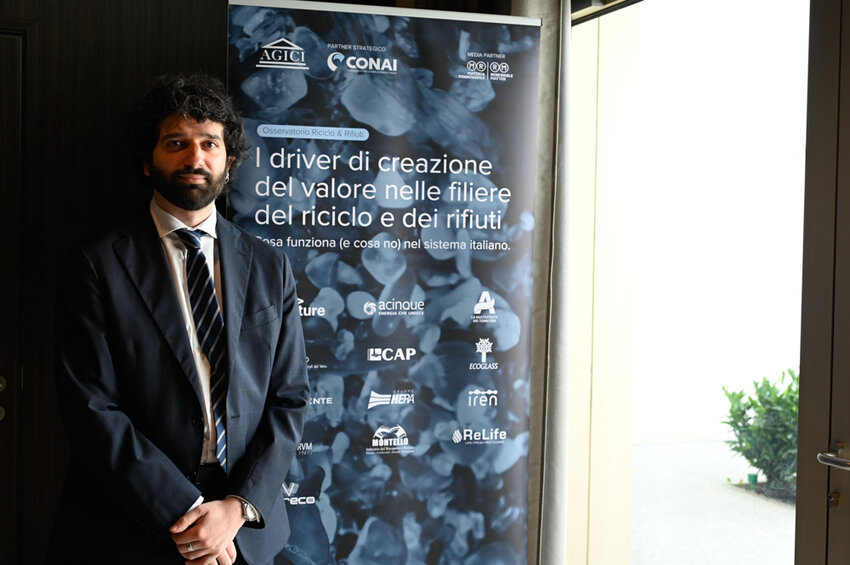
Traditional mechanical recycling processes recover about 42% of the plastic packaging released for consumption, but the demand for ever greater circularity drives us to seek strategies to raise this level even further: among these, chemical recycling can tackle a part of the material now destined for energy recovery. And not only that. <<This process enables a polymer to be broken down into monomer and reformed into a new polymer, in every way similar to the virgin. This exceeds the limits of current mechanically recycled materials, which cannot perform as well as virgin plastic and cannot be used, for example, in food-contact packaging. Chemical recycling can also be implemented in the sorting residues of undifferentiated waste, allowing material recovery and avoiding the CO2 emissions associated with waste-to-energy.>> Eugenio Sini, coordinator of the Recycling & Waste Observatory of AGICI, an economic-strategic research and consulting boutique with a strong focus on the key aspects of ecological and energy transition, so explained.
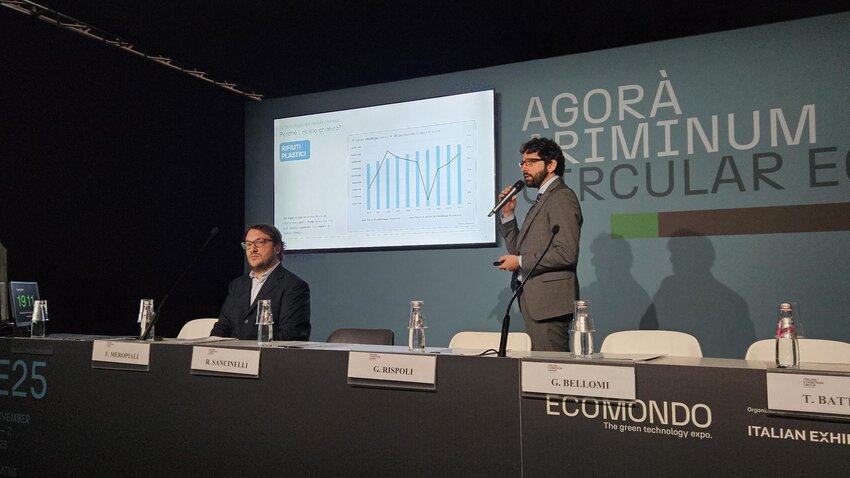
At Ecomondo 2025, the company presented the report “Chemical recycling: development potential and proposals to get the market off the ground” <<The goal of the study was to understand whether these premises were plausible and under which conditions the various chemical recycling technologies (solvolysis, pyrolysis and gasification, ed.) could work>>.
What is the state of the chemical recycling chain?
<<Across Europe, we are witnessing an increase in the authorised capacity of pyrolysis plants, which may be used for the recovery of mixed polyolefins (PE and PP), currently incinerated with the rest of the plasmix. The trend depicts an exponential curve: we are now at the inflection point, in the moment that precedes, according to technology diffusion patterns, large-scale adoption>>.
And in Italy?
<<We detect this same rush towards pyrolysis. Trials conducted so far on small pilot plants are resulting in permit applications for 20,000 to 40,000 tonne sites. In addition, we see players who, reasoning already from a supply chain perspective, are positioning themselves on the market as feedstock preparers, which will power the plants of other companies. The Italian supply chain is one of the most mature, with several private players making investments even in the absence of regulatory certainty>>.
- You may also be interested in: Green jobs, a driver for Italian development
What are the obstacles and risks that the supply chain is facing?
<<We have identified at least three types of risks, which must be managed to enable the supply chain to scale up and break out of the vicious circle of the lock-in mechanism. The first is connected to the availability of feedstock, as, for example, the amount of polyolefins in plasmix has a physical limit and must also be carefully treated before being used as input for pyrolysis. In a scenario where several pyrolysis plants are competing for a limited feedstock, any unchecked increase in the feedstock price could drive plants out of business. The second risk, linked to the plants themselves, is closely related to the first: if more plants are authorised than are needed to process the amount of feedstock available, this will create over-capacity that could push companies to compete for scarce feedstock and then push them out of the market if they fail to saturate the plants>>.
The third risk, instead, is related to output markets, such as pyrolysis oil or methanol.
<<The sale of such products can only economically support the entire supply chain if a “green” premium is recognised downstream. According to our scenarios, we assume that the regulatory obligation and the scarcity of these products will initially push this premium upwards. However, eventually, we can expect that it will have to decrease to compete with the fossil-based product>>.
At the regulatory level, which knots need to be unravelled?
<<At the European level, it is crucial to establish mass balance calculation mechanisms for pyrolysis oil and low-carbon fuels for sustainable methanol. Such definitions will allow downstream markets to exist and thus support the entire supply chain. Secondly, an end-of-waste protocol for pyrolysis plant feedstock must be developed to standardise the process and facilitate product circulation, possibly at European level. Furthermore, it is necessary that plant authorisation processes are managed centrally according to the actual amount of feedstock available in order to avoid over-capacity, hoping that centralisation can also speed up and facilitate permitting>>.
What emerges from the business cases examined by the study? How can the sustainable development of the supply chain be promoted?
<<Both pyrolysis and gasification technologies have, for the time being, very high CAPEX and require stability to make the project profitable. The market conditions for feedstock, as well as those for pyrolysis oil and sustainable methanol, need to be stabilised as much as possible, as these products need a high premium from the market at an early stage>>.
How to guarantee the quality and availability of the feedstock?
<<Cooperation between all actors is required, namely COREPLA as supplier of the polyolefin mix, feedstock preparation companies, pyrolysis companies and integrated ones. Besides defining an authorisable capacity in terms of pyrolysis plants, in order to avoid the risk of over-capacity, and standardising the quality of feedstock through end-of-waste decrees, it is important that the various players along the chain refrain from boosting their margins at the expense of those upstream or downstream: in this fragile and launching phase, the chain depends on everyone being in the market. If the mass balance regulations allow the pyrolysis oil market to exist, its high value at this early stage should allow the entire supply chain to stay in the market>>.
Does this also apply to gasification?
<<In this case too, plants must be authorised with an appropriate capacity in relation to the feedstock actually available, such as SSF (Solid Secondary Fuel) or other special waste (pulper from paper mills, waste from tanneries, etc.). The feedstock availability is potentially larger than for pyrolysis; however, the plants are generally larger in size and, even then, need to be authorised according to the actual availability of material. In the future, this availability may even increase if we consider a gradual decommissioning of some end-of-life waste-to-energy plants in Italy>>.
Are the downstream markets for chemical recycling products ready?
<<No. Markets for pyrolysis oil and sustainable methanol do not exactly exist at present. They can only be established through legislative intervention. The objectives of European regulations have created a potential demand for these products, but there is still a lack of shared definitions to enable their commoditisation. Policy-makers are at work, but it is important that they consider the voice of the market players>>.
Have you developed possible scenarios for these markets?
<<Noting the PPWR's recycled content targets for food contact packaging, we have estimated a minimum demand for pyrolysis oil to meet these targets of 830 kt by 2030, exceeding the potential supply. This may result in structural shortages and high prices. Likewise for the sustainable methanol market, if we consider its use in bunkering, based on the FuelEU Maritime targets for decarbonising shipping, we have assumed a market of more than 3.2 Mt of sustainable methanol. This is several orders of magnitude higher than the potential supply>>.
In terms of investments, how does Italy compare to Europe?
<<Italy is the country with the largest number of active projects, net of disinvestments, differentiated in all three main technologies: solvolysis, less mature; pyrolysis, and gasification. Germany, France and Belgium follow, specialised only in the first two processes. The Italian industrial system is in continuity with the investments made in the past in mechanical recycling, which brought us to the top of the European efficiency rankings in waste management. Nevertheless, unlike the normal markets for secondary raw materials, that tend to have a national dimension, a European market is conceivable for chemical recycling products, which Italy will have to deal with. In particular, the framework of the broader reconfiguration of the European chemical industry has to be considered. Potential demand for pyrolysis oil comes from downstream cracking plants, which are, however, shutting down all over Europe, including Italy: Italian chemical recyclers will therefore have to operate in a market with a shrinking number of buyers>>.
- You may also be ineterested in: Green economy, what to keep an eye on: the situation in Italy and what's happening around the world
One of the goals of the study was to gather the main national players in chemical recycling around a table, as was the case at Ecomondo: what message emerged?
<<As mentioned, this sector can only overcome the scale-up phase if there is cooperation between the actors along the supply chain, and it was therefore essential to create a moment of dialogue to understand the various expectations. The key message for the institutions is that companies are ready to invest and cooperate. We need a negotiating table and an industrial policy that defines long-term horizons and facilitates the start-up: the State, in addition to advocating for an Italian position in European policy-making, should guide the authorisation processes based on the available feedstock and facilitate permitting>>.
Which incentives do you suggest?
<<We have elaborated a proposal for an incentive that the Government could provide to support this first phase of development of the pyrolysis industry. It has no cost for the public treasury, but could actually represent a financial saving. In fact, Italy currently pays the European Union, through the so-called plastic levy, €800 for every tonne of non-recycled plastic. If a pyrolysis plant managed to chemically recycle a tonne of plastic not previously recycled, it could receive a subsidy on OPEX which, in addition to stabilising the supply chain, would allow the general taxation to save the cost of the plastic levy>>.
Article written by Maria Carla Rota
This blog is a joint project by Ecomondo and Renewable Matter
PUBLICATION
17/12/2025
Other related news

06/07/2023
5 European Start-ups non to be missed

03/04/2025
5 under 30 who have revolutionized the circular economy

23/04/2025
7 young leaders under 30 in the green and circular economy

05/12/2024
7 trends in the Green Economy that will define 2025

15/12/2024
30/05/2023

17/12/2025
Africa, a frontier for the next Green Economy
29/04/2025
Precision agriculture: what advantages does it offer and how can it support North African countries?

10/05/2024

26/11/2025
Companies: how to communicate the transition in the greenlash era?
24/04/2025
Sodium batteries: the technology that could make the EU less dependent on critical materials

29/01/2026
Wellbeing and happiness: when science meets business, society and nature

27/11/2024

17/09/2024
Blue Rolodex: Start-up & Influencer of the Blue Economy

30/05/2024