
In the current historical period, marked by environmental, social and economic crises, events that were once isolated are now intertwined and systemic phenomena: climate change, loss of biodiversity, social inequalities, fragility of value chains and geopolitical instability are calling into question the traditional concept of sustainability, defined as the reduction of negative impacts and regulatory compliance. Reducing damage is no longer enough: transformative solutions are required, capable of actively contributing to the renewal of ecosystems, communities and economies.
This shift in perspective has led to the emergence of the concept of regenerative enterprise: <<An organisation that intentionally aligns its business model with the creation of positive and additional value for people, the planet and the economy, acknowledging the profound interdependence between these areas,>> explains Enrico Bellazzecca, Assistant Professor of Impact and Sustainability Management and Organization at the School of Management of Politecnico di Milano.
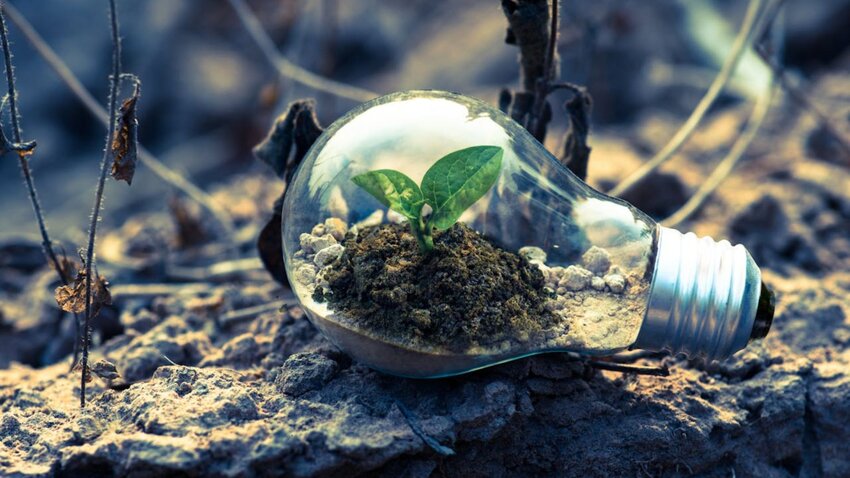
What is a regenerative enterprise
The difference compared to a sustainable company mainly lies in the ambition and underlying stance. <<Sustainability, in its most common meaning, focuses on mitigating impacts and complying with environmental and social standards. Regeneration, on the other hand, is based on the assumption that systems are already degraded and that businesses can play an active role in improving their health, vitality and resilience. Not only preserving resources, but regenerating them, while strengthening social relationships, natural assets and the capacity of local areas.>>
In recent years, a growing number of Italian and international studies have examined this issue: <<The Politecnico di Milano is also conducting studies that analyse the connection between purpose, business models, innovation and impact, emphasising how regeneration-oriented approaches can strengthen organisations’ ability to deal with complex and uncertain contexts. The central idea is that regeneration is not an additional objective, but a different way of conceiving the role of business in society,>> continues Bellazzecca.
Emerging trends in Italy and Europe
Alongside ecological and industrial transition policies, Italy and Europe are developing strategies and frameworks dedicated to the social and sustainable economy, which explicitly recognise the value generated by businesses in social, environmental and economic terms. Moreover, strategic plans are spreading at the local level, seeking to integrate these aspects more coherently, overcoming fragmented, sector-specific approaches.
Another important element is the growing focus on ecosystems: <<More and more often, regeneration is interpreted as a collective process involving businesses, public bodies, civil society organisations, universities and local communities. There is talk of sustainable and social innovation ecosystems, intended as spaces for collaboration where different skills, resources and objectives intertwine. In Italy, these trends are particularly evident in manufacturing districts, evolving towards more collaborative models; in urban regeneration projects, integrating social, economic and environmental dimensions; and in local initiatives, focusing on the care of common goods and relationships.>>
- You may also be interested in: Sustainability, what will 2026 look like? 10 trends and events to look forward to
Incorporating regeneration and measuring impact
Incorporating regeneration into business strategies requires a shift in approach, as Enrico Bellazzecca explains: <<The starting point is a genuine reflection on purpose and intent, clearly defining the positive contribution that the organisation intends to make and who it is intended for. This is followed by a consistent review of operating models, supply chains, governance systems and decision-making processes, with the involvement of internal and external stakeholders. In this process, innovation plays a central role as a variable mediating between vision and results: by means of technological, organisational and social innovations, companies can develop solutions capable of regenerating resources, reducing systemic vulnerabilities and creating new forms of shared value.>>
How can impact be measured?
<<We must not limit ourselves to calculating emissions avoided or resources saved, nor should we stop at outputs alone, i.e. the activities carried out or the immediate results produced. Instead, we must ask ourselves about the outcomes, i.e. the more profound and lasting effects on the quality of ecosystems, the strengthening of local communities, the creation of decent work and the development of new skills.>>
According to Bellazzecca, recent research indicates the need to develop measurement approaches able to capture these changes over time, by combining environmental, social and economic indicators with a more systemic interpretation of the processes triggered. <<In this sense, tools such as impact assessment, voluntary certification and advanced reporting frameworks may be useful if used not merely as compliance requirements but as levers for learning and support for strategic decisions.>>
- You may also be interested in: Profumo: Uncertainty must not cloud clean tech investment
The B Corp international movement
The regenerative business vision is at the heart of the work carried out by B Lab, a global non-profit network which for over twenty years has been coordinating the international B Corp movement, namely companies that consciously choose to use business as a force for good. <<Through our B Impact platform, every company can start assessing its impact. B Corp certification is the next step, with independent verification that guarantees transparency and credibility,>> explains Veronica Fervier, country manager of B Lab Italia.
On a global level, the B Corp community includes over one million workers in more than 10,000 companies, operating in over 100 countries and active in 159 sectors, all united by the goal of creating a fairer and more inclusive economic system. <<The main obstacle that companies face in becoming regenerative is cultural: today, many organisations still consider business exclusively as a means of generating profit, rather than as a driver of widespread well-being.>> In addition to this barrier, other concrete challenges exist: <<Companies must learn to measure and manage their social and environmental impact in a clear and objective manner, by collecting data and setting measurable goals. It is also necessary to involve suppliers, partners, and local communities, coordinating supply chains and creating collaboration around shared values. Certain regenerative practices may require significant investment or a long time to generate economic returns, and internal change requires the involvement of the entire organisation, from managers to employees, in sharing new values and objectives.>>
Even legislative contexts and economic incentives are not always conducive to regenerative business models. <<The complexity of regulations and the plurality of ESG reporting frameworks, with often fragmented and difficult-to-compare international certifications and standards, make the path to regeneration even more complex,>>continues Fervier. <<For this reason, B Lab has devoted a great deal of attention to interoperability in the development of its standards: our version 2.1 is aligned with the data and methodologies of other certification schemes and reporting frameworks related to sustainable development, in particular ESRS, GRI, SBTi and Fairtrade, in an effort to simplify the work of companies and make their journey clearer and more consistent.>>

The transformative power of collective action
In a recent study entitled The Nature of Business, B Lab analysed what would happen if all companies adopted practices comparable to those of B Corps, with a focus on climate: by 2100, we could reduce the global temperature by 0.5°C, save around 600,000 lives from extreme temperatures and significantly reduce the risk of extinction for thousands of animal and plant species. <<These results prove that the private sector has enormous transformative power through collective action: it will not be a single company that changes the world, but a system that evolves step by step, company by company. An economy in which prosperity and well-being are not in competition and in which no one wins alone, but everyone moves forward together,>> emphasises Veronica Fervier.
The impact on consumer and investor behaviour
Last but not least, being a regenerative enterprise strengthens the company's reputation and offers a competitive advantage. <<It allows you to attract and hold on to motivated talent, increasingly focused on the meaning of their work and the contribution a company can make to society, and facilitates access to investors oriented towards sustainable and responsible businesses.>> Furthermore, a constant commitment to innovation allows companies to stay competitive even in complex contexts or times of crisis, as demonstrated by the Financial Resilience Study published by B Lab Europe. <<The search for solutions that reduce environmental impact and improve social well-being becomes a strategic lever for growth and a differentiating factor compared to traditional business models.>>
As shown by B Lab Italia's Brand Awareness study, brand recognition of B Corp has increased by 6% year-on-year, reaching 25% in 2024, with younger consumers, particularly those aged between 25 and 34, driving growth. This increased awareness is closely linked to changes in consumer expectations: <<As many as 94% of respondents believe that companies should be required to include stakeholder interests in their decision-making processes, while 59% say that certifications influence their purchasing and employment choices.>>
Article written by Maria Carla Rota
This blog is a joint project by Ecomondo and Renewable Matter
Credits:
- Foto di Singkham
- Foto di Christina Morillo
PUBLICATION
28/01/2026
Other related news

06/07/2023
5 European Start-ups non to be missed
03/04/2025
5 under 30 who have revolutionized the circular economy

23/04/2025
7 young leaders under 30 in the green and circular economy

05/12/2024
7 trends in the Green Economy that will define 2025

15/12/2024
30/05/2023

17/12/2025
Africa, a frontier for the next Green Economy
29/04/2025
Precision agriculture: what advantages does it offer and how can it support North African countries?

10/05/2024

26/11/2025
Companies: how to communicate the transition in the greenlash era?

24/04/2025
Sodium batteries: the technology that could make the EU less dependent on critical materials

29/01/2026
Wellbeing and happiness: when science meets business, society and nature

27/11/2024

17/09/2024
Blue Rolodex: Start-up & Influencer of the Blue Economy