
In 2026, the EU is put to the test of the circular economy
The upcoming year will see the introduction of the Circular Economy Act, but that's not all. Many EU initiatives are moving into the implementation phase. The goal is to double the current circularity rate (11.8%) by 2030.
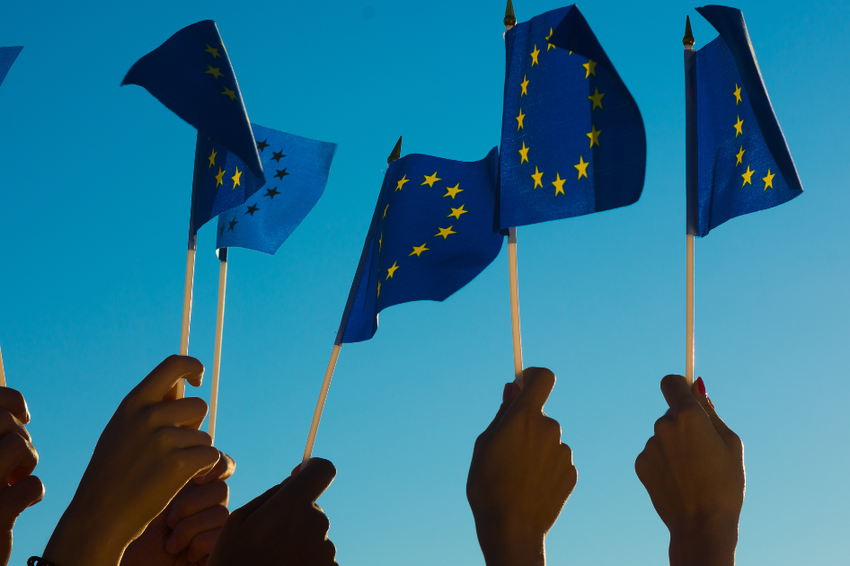
If 2025, especially the second half of the year, marked a decisive phase for EU policy on the circular economy, 2026 will be even more crucial, both for Europe and for Italy: many projects and initiatives will come to fruition and accelerate the transition against a backdrop of global instability, growing consumption, and geopolitical tensions.
How far have we come in Europe and Italy?
An important and necessary change, given the significant gap between the rate of resource consumption and the capacity of economic systems to improve circularity. Globally, according to Circularity Gap 2025, the rate of material reuse has fallen to 6.9% (from 9% in 2018). In the EU, however, it has risen steadily from 10.7% in 2010 to the current 11.8%, due to an industrial strategy geared towards reducing import dependency and consolidating internal recycling chains, but progress remains too slow. Analysts also believe that possible future slowdowns must be taken into account, as these are inevitable in times of geopolitical uncertainty, when businesses and citizens tend to postpone investments and structural changes.
In this scenario, Italy shows both positive and negative aspects, as emerged from the Report on the state of the green economy, drawn up by the Foundation for Sustainable Development and the National Council for the Green Economy, presented at Ecomondo 2025. Italy is strong in the circular economy, as it knows how to transform waste into value, but it still needs to improve in terms of energy, mobility, and climate governance.
Here are the 7 innovations for the circular economy in 2026.
1. Circular Economy Act
In Europe, all eyes are on the Circular Economy Act: the future framework law on the circular economy, due in the second half of 2026. It aims to increase the market's competitiveness and resilience by doubling the circularity rate by 2030, reducing dependence on strategic raw materials, and strengthening recycling supply chains, in line with the direction outlined by the Green Deal and, in particular, the 2020 Circular Economy Action Plan. To this end, the European Commission launched a public consultation from 1 August to 6 November 2025, asking citizens, businesses, and organisations to submit suggestions via the “Have Your Say ” platform. The Circular Economy Act is expected to introduce a comprehensive, coherent and competitive regulatory framework, incentivising investments in recovery, recycling and reuse.
2. Cross-border traceability of waste
A major change planned for 2026 will involve the complete digitisation of cross-border procedures for waste shipments. As of 21 May next year, operators and competent authorities will be required to use a single electronic platform, the Digital Waste Shipment System (Diwass). This platform will be used to send documents and notifications regarding movements between Member States, in order to implement the Waste Shipment Regulation, effective from 3 August 2025. The market for secondary raw materials will thus be made more transparent, the control of illegal trafficking will be improved, administrative time and costs for companies will be reduced, and the competitiveness of the recycling chains will be strengthened.
- You may also be interested in: Energy and WEEE, data centres are at the forefront of a circular economy
3. New Packaging Regulation
Starting in mid-2026, precisely on 12 August, at the end of an 18-month transition period, the new PPWR (Packaging & Packaging Waste Regulation – EU Regulation 2025/40), in force since 11 February 2025, will come into force. This regulation establishes sustainability and labelling requirements for packaging throughout its life cycle, including production, use and waste management. It includes all packaging and packaging waste, regardless of material or origin (industrial, retail, household, etc.), complementing existing EU waste management legislation.
4. Waste Framework Directive
On the subject of waste, the EU Parliament and Council reached agreement in February 2025 on the revised Waste Framework Directive (2008/98/EC), which focuses on new measures to prevent and reduce food and textile waste. As far as food is concerned, mandatory food waste reduction targets are introduced, to be achieved by 2030: a target of -10% for waste from processing and manufacturing and a 30% reduction per capita in waste from retail, restaurants, food services and households, referring to the average amount of food waste generated in these sectors in the period 2021-2023.
5. Textile EPR Obligation
Regarding textile waste, on the other hand, the new Directive (EU) 2025/1892, which entered into force on 16 October 2025 and must be transposed by 17 June 2027 by the member states, introduces the obligation of Extended Producer Responsibility (EPR). A strategic measure, considering that this sector generates approximately 12.6 million tonnes of this type of waste per year in the EU, of which 5.2 million tonnes is represented by clothing and footwear, for a total of 12 kg per person, based on data released by the Council of the European Union.
Textile industries and fashion brands will thus be required to pay a fee to help finance the collection and treatment of waste, depending on how circular and sustainable the design of their products is.
In Italy, the textile EPR is expected to enter into force as early as the first quarter of 2026, as announced recently by Laura D'Aprile, director of the Department for Ecological Transition at the Ministry of the Environment. The six sectoral consortia, created in Italy after the introduction of compulsory separate collection of textiles in 2022, welcomed this commitment by the government, but emphasised the urgency of the publication of the specific decree.
6. Right to Repair
Moreover, by 31 July 2026, EU citizens will see their consumer goods' right to repair materialised, thanks to Directive 2024/1799, better known as “Right to Repair”, adopted by the EU in June 2024. The EU Council estimated that the premature disposal of repairable goods generates a huge amount of waste each year, amounting to approximately 35 million tonnes, and a massive consumption of resources employed, valued at 30 million tonnes, as well as 261 million tonnes of greenhouse gas emissions. What can be done to change this situation? Firstly by incentivising manufacturers to produce goods that can last longer and can be repaired, reused and recycled, and secondly by raising consumer awareness to reuse products as much as possible, finding creative reuses and having them repaired if defective or damaged.
- You may also be interested in: Right to Repair: the other EU Member States are getting ready. What does the directive entail?
7. Ecodesign
Finally, Regulation (EU) 2024/1781 on Ecodesign, issued in June 2024, set a general framework for more sustainable products (durable, repairable, recyclable). Two innovations will be implemented in 2026, namely the introduction of the digital product passport, to be activated by the Commission by 19 July 2026, and the ban on the destruction of unsold consumer products, such as clothing and footwear, also starting on 19 July 2026.
Article written by Emanuele Bompan and Maria Carla Rota
This blog is a joint project by Ecomondo and Renewable Matter
PUBLICATION
12/12/2025
Other related news

06/07/2023
5 European Start-ups non to be missed

03/04/2025
5 under 30 who have revolutionized the circular economy

23/04/2025
7 young leaders under 30 in the green and circular economy

05/12/2024
7 trends in the Green Economy that will define 2025

15/12/2024
30/05/2023

17/12/2025
Africa, a frontier for the next Green Economy

29/04/2025
Precision agriculture: what advantages does it offer and how can it support North African countries?

10/05/2024

26/11/2025
Companies: how to communicate the transition in the greenlash era?
24/04/2025
Sodium batteries: the technology that could make the EU less dependent on critical materials

29/01/2026
Wellbeing and happiness: when science meets business, society and nature

27/11/2024

17/09/2024
Blue Rolodex: Start-up & Influencer of the Blue Economy