
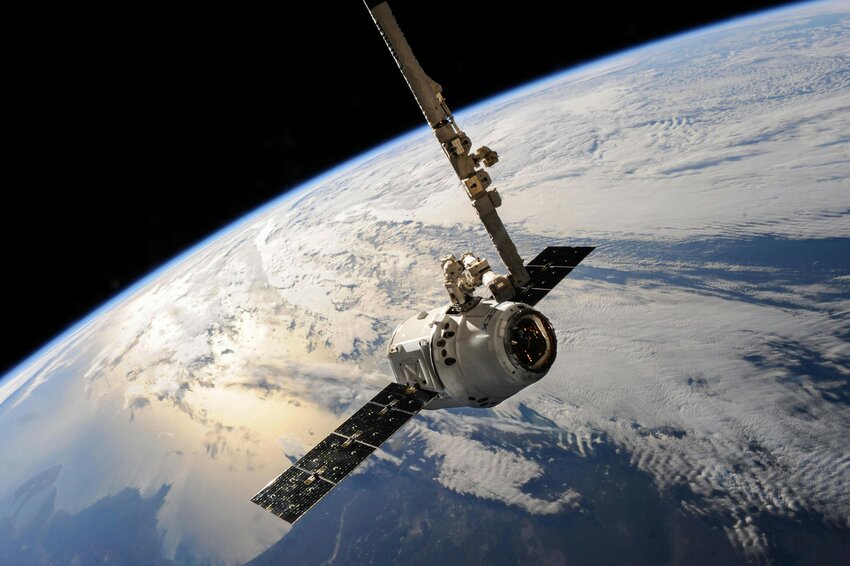
A revolution is coming. Or rather, it is already here and changing our lives, though we often are not aware of it. It is the New Space Economy, so called to differentiate it from the period between the Cold War and the early 2000s, which saw space activities almost exclusively in the hands of states and government agencies (NASA, ESA, Roscosmos) and when space was considered a futuristic dimension.
From the start of the new millennium, however, and then increasingly rapidly after 2010, much has changed: private operators, led by SpaceX and Blue Origin, have made a massive entry into the sector; costs have fallen dramatically thanks to technological advances; and an open ecosystem has emerged, involving different players and sectors, from agriculture to energy, logistics to healthcare, advanced manufacturing to digital, all of which use space data, services and technologies as levers for innovation and competitiveness. Many examples of this ongoing revolution are already evident: consider the numerous items that are now part of our everyday lives but derive from aerospace research, such as memory foam mattresses, anti-glare glasses, Wi-Fi, telemedicine, miniaturised smartphone cameras and cordless vacuum cleaners.
Beyond the traditional scope of aerospace
Out of this awareness comes BEX – Beyond Exploration, a new expo-conference dedicated to the space economy and commercial space flight, scheduled for 23-25 September 2026 at the Rimini Exhibition Centre. This innovative event, promoted by Italian Exhibition Group (IEG) in collaboration with the Emilia Romagna Region, aims to place Italy at the centre of European and international debate.
<<It will be a completely new addition to the landscape of events dedicated to space exploration: not an aerospace fair in the strict sense, but a multidisciplinary platform, in which the new space economy will be presented as a cross-cutting ecosystem, able to generate concrete benefits for the real economy, fostering dialogue between the traditional space supply chain and companies in unconventional industrial sectors, as well as universities, start-ups, research centres and institutions,>> explains Marcello Azzoni, founder and Chief Research and Development Officer of Spacewear, a clothing brand for astronauts, but also a member of the Technical Scientific Committee of BEX, a programme developed by a group of experts from complementary disciplines.
<<The format brings together a strong B2B focus with opportunities for public outreach and education, so that anyone interested can see and learn more about how space services will change our lives over the next decade.>> With a view to nurturing new skills and visions, particular attention is paid to young people and students, with the aim of bringing them closer to the world of aerospace, in whose development they will play a leading role. <<We will strive to use accessible and understandable language, even ‘pop’ and emotional, as I like to call it, so that this new dimension can be disseminated and made as available as possible: space will be the new engine of development for humanity,>> continues Marcello Azzoni.
- You may also be interested in: Ecomondo looks to the future of the circular economy and sets a date for 2026
What will the first edition of BEX look like
In anticipation of the first edition of BEX, IEG has initiated talks with the Ministry of Enterprise and Made in Italy (MIMIT), the Ministry of Economy and Finance (MEF), the National Research Council (CNR), the Presidency of the Council of Ministers, the Italian Space Agency (ASI) and the Italian Air Force, aiming to build partnerships and obtain institutional patronage. The initiative's strategic value is also highlighted by the involvement of leading institutional and scientific figures, including Colonel Walter Villadei, a professional astronaut of the Italian Air Force and BEX Ambassador.
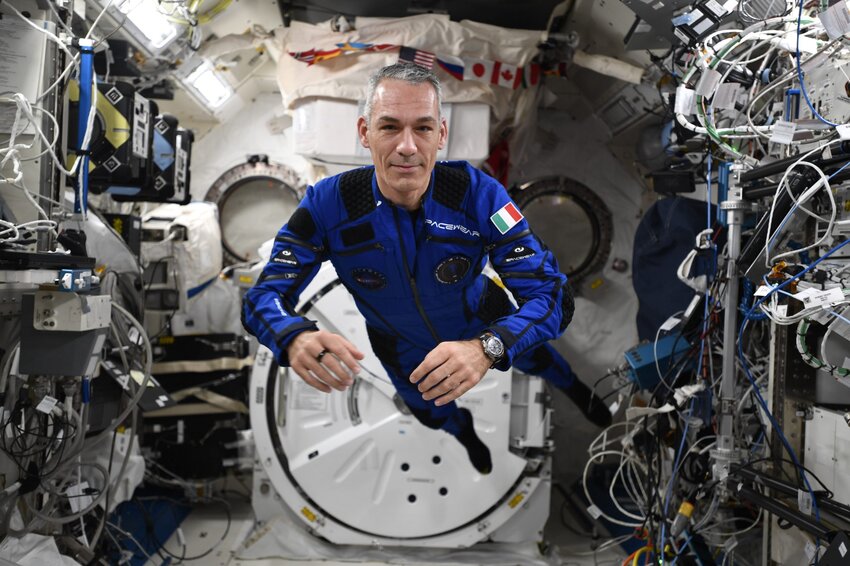
The BEX programme focuses on the entire value chain of the space economy: from the upstream sector, including transport systems, propulsion, space modules and orbiting stations; to the downstream sector, related to the use of satellite data for advanced services on Earth. It will feature exhibition spaces, networking and matchmaking opportunities, educational lectures, specialist workshops and hackathons for students. Additionally, autonomous multi-domain systems – space, aeronautical, terrestrial and underwater – will be showcased both as operational solutions and as experimental platforms for industrial innovation. Completing the picture is the cross-cutting “Beyond Nxt” area, devoted to start-ups, universities, research centres, government agencies, and NGOs, reflecting the desire to involve the entire innovation ecosystem.
BEX is therefore set to become a strategic platform for the future of the Italian and European space economy, integrating skills, sectors and visions in a truly interdisciplinary perspective, in which space is no longer just about exploration but an enabling infrastructure for innovation on Earth.
Article written by Maria Carla Rota
This blog is a joint project by Ecomondo and Renewable Matter
PUBLICATION
28/01/2026
Other related news

06/07/2023
5 European Start-ups non to be missed

03/04/2025
5 under 30 who have revolutionized the circular economy

23/04/2025
7 young leaders under 30 in the green and circular economy

05/12/2024
7 trends in the Green Economy that will define 2025

15/12/2024

30/05/2023

17/12/2025
Africa, a frontier for the next Green Economy

29/04/2025
Precision agriculture: what advantages does it offer and how can it support North African countries?

10/05/2024

26/11/2025
Companies: how to communicate the transition in the greenlash era?

24/04/2025
Sodium batteries: the technology that could make the EU less dependent on critical materials

29/01/2026
Wellbeing and happiness: when science meets business, society and nature

27/11/2024

17/09/2024
Blue Rolodex: Start-up & Influencer of the Blue Economy