
Every year on 24 January, International Education Day is celebrated, as proclaimed by the United Nations General Assembly to highlight the crucial role of education in fostering the growth of future generations, the well-being of society as a whole and human development. It is an initiative that provides an opportunity to consider the importance of educating people, from a very young age, on issues such as the environment, circularity, and innovation, as a means of accelerating the ecological transition process. Sustainability is not only a matter of technology but is also about the ability to generate new professional skills and pursue continuous learning throughout one's working life.
Green jobs and mismatched supply and demand
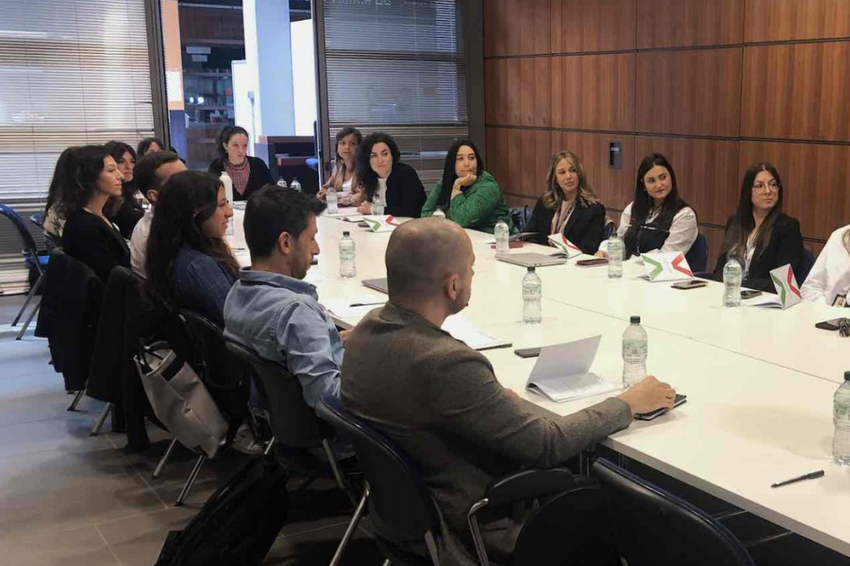
Italy has a significant gap in terms of training: the green job market continues to grow, but the shortage of qualified technicians is slowing down its expansion. Faced with an ever-increasing demand for skills related to the transition, there is a structural deficit in human capital. According to the research study “Trajectories – Migration flows, skills and energy transition” (in Italian, Traiettorie – Flussi migratori, competenze e transizione energetica), sponsored by the Maire-ETS Foundation, there is a gap of over 800,000 workers in green sectors, which needs to be filled through integrated upskilling pathways, job corridors, skills recognition and mentoring programmes. What's more, in 2023, foreign workers already accounted for over a fifth of green job employees in Italy, yet most of them are employed in basic tasks due to the difficulty of recognising qualifications acquired abroad and the lack of technical and language training programmes.
The mismatch between the skills available and those sought by companies is confirmed by various studies, including the Green Skills Report 2025, conducted by LinkedIn's Economic Graph. A paradox emerges strongly in this survey, showing two opposing trends: on the one hand, the recruitment of sustainability professionals has grown by an average of 3.7% in Italy and 6.2% globally; on the other, green skills in Italy have decreased by 6.3% on an annual basis, from 15.5% (2023-2024) to 9.2% (2024-2025).
- You may also be interested in: Green jobs, a driver for Italian development
Ecological, but also digital transition
A solid alliance between businesses, schools, universities and institutions is necessary to make education and training a long-term investment strategy. The topic was also discussed at Ecomondo 2025, during the conference “Green Jobs, Capital of the Future”, held by the “Green Jobs & Skills” project of Ecomondo-IEG in collaboration with Unioncamere and Asvis: for the five-year period 2025-2029, demand for workers with green skills is expected to reach 4 million, accounting for two-thirds of our country's employment needs.
The most sought-after skills range from a general “green attitude”, namely the ability to reduce waste and increase efficiency by adopting effective energy and environmental solutions, to specific technical skills for the management of products and technologies, to the e-skill mix, with the integration of at least two advanced digital skills, such as the use of Big Data and AI for plant optimisation, confirming how closely linked the ecological and digital transitions are.
- You may also be interested in: Companies: how to communicate the transition in the greenlash era?
SAFTE, Advanced Education School for the Ecological Transition
Precisely to meet the demand for qualified professionals in both the public and private sectors, SAFTE, the Advanced Education School for the Ecological Transition, was established. Promoted by Italian Exhibition Group and Alma Mater Studiorum – University of Bologna, in collaboration with Ecomondo and ReteAmbiente, it is now in its fifth year.
The mission is to disseminate and promote a culture of sustainability within companies, institutions and associations, fostering upskilling and reskilling processes. It is aimed at managers, executives, administrators, technicians, consultants and professionals interested in acquiring new skills or perfecting those they already possess so that they can effectively integrate the new paradigms of sustainable development into the strategic and industrial plans of the organisations in which they operate. The School is also open to public administration managers and executives involved in the ecological and energy transition, as well as young professionals and recent graduates, with the possibility of obtaining scholarships covering 50% of the enrolment cost.
The multidisciplinary course is based on the assumption that a sectoral and specialised approach is no longer sufficient to manage a systemic problem such as environmental responsibility. Lasting twelve weeks (20 March – 19 June 2026), it is divided into four thematic units, for a total of 80 hours of e-learning training: the introductory unit, dedicated to national and European guidelines concerning the E (Environment) variable of ESG, is followed by two highly specialised units, devoted to the circular economy of materials and energy strategies, and then by a concluding unit, integrative of economy and energy into the ESG structure of the company. Both interactive meetings in direct contact with teachers and training modules that participants can manage independently through a streaming service from the dedicated platform are scheduled.
IEG Academy, the Talent Workshop
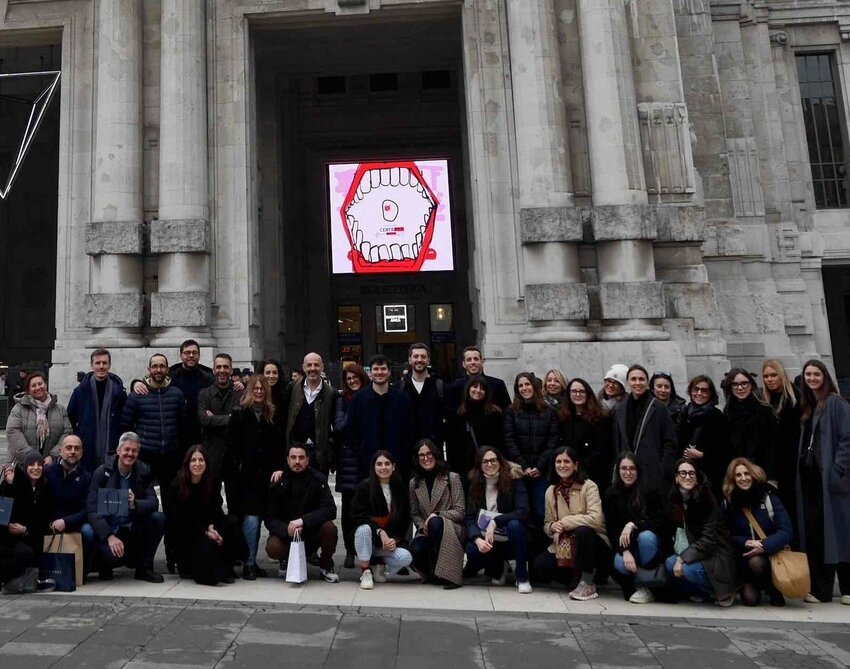
SAFTE is part of the IEG Academy, a project created by Italian Exhibition Group to promote training and professional development: an environment for shared growth, where training courses, workshops and digital content come together to nurture talent and transform knowledge into action. These efforts are the natural evolution of a process that began some time ago within the Group, with the aim of integrating and enhancing the many projects that have contributed to staff development over the years.
At the heart of the Academy is the IEG Business School: it promotes the development of skills in leadership, innovation and change management through internal master's programmes tailored to middle managers and young people with potential, while also offering IEG's know-how to the local area, creating connections between businesses, universities and centres of Excellence. By bringing together training and innovation, sustainable and shared value is generated for the benefit of the entire community.
Article written by Maria Carla Rota
This blog is a joint project by Ecomondo and Renewable Matter
PUBLICATION
21/01/2026
Other related news

06/07/2023
5 European Start-ups non to be missed

03/04/2025
5 under 30 who have revolutionized the circular economy

23/04/2025
7 young leaders under 30 in the green and circular economy

05/12/2024
7 trends in the Green Economy that will define 2025

15/12/2024
30/05/2023

17/12/2025
Africa, a frontier for the next Green Economy

29/04/2025
Precision agriculture: what advantages does it offer and how can it support North African countries?

10/05/2024

26/11/2025
Companies: how to communicate the transition in the greenlash era?

24/04/2025
Sodium batteries: the technology that could make the EU less dependent on critical materials

29/01/2026
Wellbeing and happiness: when science meets business, society and nature

27/11/2024

17/09/2024
Blue Rolodex: Start-up & Influencer of the Blue Economy